Patchwork Board Game Review: A Cozy Strategy Game for Two
The Patchwork board game review conversation almost always starts the same way: “It looks simple… but wow, there’s more going on here than I expected.” Designed exclusively for two players, Patchwork combines calm, cozy aesthetics with sharp decision-making, making it one of the most beloved 2-player board games of all time.
In Patchwork, players take turns selecting fabric pieces to build a personal quilt board, balancing time, buttons (the game’s currency), and spatial efficiency. It’s approachable enough for new players, yet deep enough to reward repeat plays — a sweet spot that many 2-player games strive for but few truly achieve.
Whether you’re building a collection of games for couples, looking for a relaxing strategy game, or searching for something that scratches the same itch as Azul or Jaipur, Patchwork deserves a close look.
Disclosure: This post may contain affiliate links. As an Amazon Associate, I earn from qualifying purchases at no additional cost to you.

What Is Patchwork?
Patchwork is a 2-player abstract strategy board game designed by Uwe Rosenberg, known for titles like Agricola and A Feast for Odin. Unlike many of his heavier games, Patchwork distills strategic thinking into a compact, calming experience that plays in about 30 minutes.
Instead of managing farms or feeding workers, you’re competing to create the most efficient quilt by carefully choosing which fabric pieces to add to your board — all while managing a shared time track that controls the pace of the game.
How Patchwork Plays
At its core, Patchwork is simple to learn, but every decision matters.
Setup
- Each player receives a quilt board
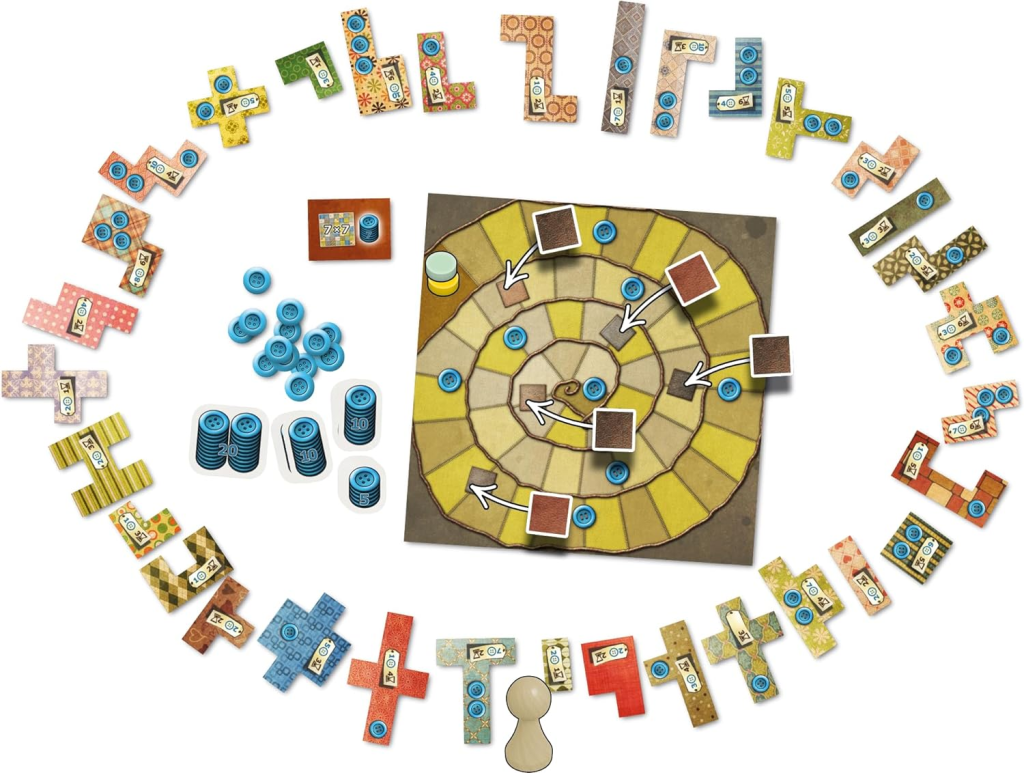
- All fabric pieces are arranged in a circle
- A neutral pawn marks which pieces are available
- Both players start on a shared time track
Buttons act as currency and also score points at the end of the game.
Taking Turns
On your turn, you can:
- Purchase a fabric piece
- Choose one of the next three available pieces
- Pay its button cost
- Advance your time marker based on the piece
- Place it on your quilt board (no overlaps)
OR
- Advance on the time track
- Move ahead to just in front of your opponent
- Gain buttons equal to spaces moved
This simple choice — buy now or wait — creates the core tension of the game.
Buttons and Income
Certain spaces on the time track trigger income, where players earn buttons based on how many button icons appear on their quilt.
Buttons matter twice:
- They let you buy future pieces
- They score points at the end of the game
Poor button management early can haunt you later.
End of the Game
The game ends when both players reach the end of the time track.
Final score is calculated by:
- Buttons earned
- Minus points for empty spaces on your quilt
Efficiency wins — not size.
Why Patchwork Works So Well
1. Perfect Information, Meaningful Choices
There’s no luck involved once the game begins. Every piece is visible, every move is intentional, and every mistake is your own. That makes Patchwork incredibly satisfying for players who enjoy pure strategy without randomness.
2. Gentle Competition
Patchwork is competitive, but not aggressive. You’re not attacking your opponent — you’re racing them, blocking opportunities, and timing purchases to your advantage. This makes it ideal for couples who want strategy without conflict.
3. Short Playtime, High Replayability
At roughly 25–30 minutes per game, Patchwork invites rematches. You’ll often finish a game and immediately want to play again, having learned just enough to want another shot.
Patchwork as a Game for Couples
If you’re building a couples game night collection, Patchwork belongs near the top.
It’s:
- Calm and cozy
- Easy to talk over
- Strategic without being stressful
- Quick enough for a weeknight
Much like Jaipur, it offers deep decision-making in a short time frame. Compared to Splendor Duel or 7 Wonders Duel, Patchwork feels more relaxing and less confrontational, making it perfect for winding down.
(Internal link opportunity: Best 2-Player Board Games for Couples)
Strategy Tips for Patchwork
Don’t Chase Big Pieces Blindly
Large pieces can be tempting, but if they leave awkward gaps, they’ll cost you points later. Sometimes smaller, flexible pieces are the smarter choice.
Button Economy Is Everything
Early button income can snowball. Prioritize pieces with button icons, even if they don’t look immediately useful.
Time Is a Weapon
Advancing the time track strategically can deny your opponent key pieces or force them into awkward purchases.
Filling the Board Matters
Every empty space costs points. Even a low-value piece late in the game can swing the final score.

Who Should Play Patchwork?
Patchwork is perfect for:
- Couples looking for relaxing strategy games
- Fans of abstract games like Azul
- Players who enjoy planning and optimization
- Gamers who want meaningful decisions without long rules explanations
It may not be ideal for:
- Large groups
- Players who prefer high interaction or direct conflict
- Those seeking thematic immersion or storytelling
Patchwork vs Other Popular 2-Player Games
Patchwork vs Jaipur
- Jaipur is faster and more luck-driven
- Patchwork is slower and more strategic
Patchwork vs Azul
- Azul offers higher player counts
- Patchwork is more intimate and controlled
Patchwork vs Splendor Duel
- Splendor Duel is tense and tactical
- Patchwork is calm and methodical
Each fills a different niche, but Patchwork stands out for its quiet intensity.
Final Verdict: Is Patchwork Worth It?
Patchwork proves that a board game doesn’t need flashy components or complex systems to be engaging. Its brilliance lies in how much strategy emerges from such a small ruleset.
If you enjoy:
- Thoughtful decision-making
- Cozy game nights
- Games that reward planning and efficiency
Then Patchwork isn’t just worth owning — it’s a staple.
This is one of those rare games that grows with you. The more you play, the more you see, and the more satisfying every quilt becomes.
Where to Buy Patchwork
You can find Patchwork at major online retailers, local game stores, and specialty board game shops.
Buy Patchwork board game
Disclosure: This post may contain affiliate links. As an Amazon Associate, I earn from qualifying purchases at no additional cost to you.

More Games to Explore on Beyond the Meeple
If you enjoyed Patchwork, you may also love:


